


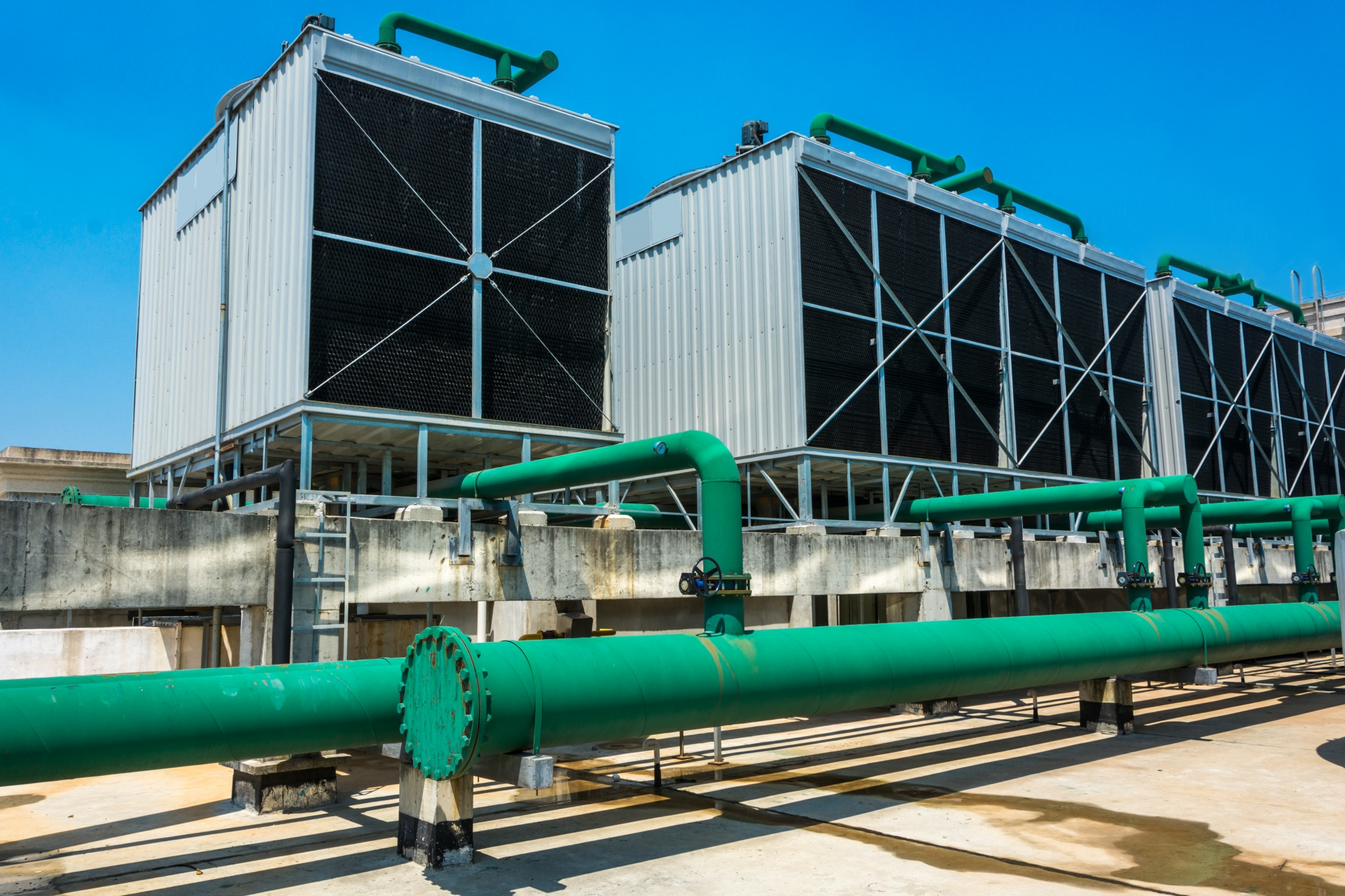
Most people believe that an industrial chiller is used to chill the air. But it doesn’t work this way.
In every industry, different types of machines are used, which generate enormous amounts of heat. Every machine or piece of equipment you buy requires a specific operating temperature to run smoothly. But as your industrial space becomes more crowded, temperatures rise, which could greatly affect the quality and safety of the end product.
An industrial chiller is used in such environments to maintain a stable temperature. In today’s article, we’ll discuss in detail how a chiller works and the different types of chillers.
Let’s get started.
What an Industrial Chiller Is
An industrial chiller is a heavy-duty refrigeration system. It basically removes heat from machinery or equipment by cooling a liquid and circulating it through different loops.
But how does it function?
So, these chillers operate through a vapour-compression cycle. Different components work together in a continuous loop to circulate the liquid.
We first have an evaporator that absorbs unwanted heat from the process fluid. Then the compressor springs into action. It pressurises and heats the refrigerant gas. Then the condenser releases the absorbed heat into the environment, either using ambient air or water. The chiller also uses an expansion valve that lowers the refrigerant’s pressure and temperature before it returns to the evaporator.
Types of Industrial Chillers
These chillers have 3 common types.
First, we have vapour-compression chillers that circulate coolant through pipes. The heat from the processes is transferred to the coolant, which then flows to a refrigerant system. The chiller fluid in the system is regularly cooled, ensuring it is fully ready for a new cycle.
The other type is a heat-absorption chiller. They have onboard heat exchangers that remove heat from the process and then circulate it to the exterior. They don’t use an onboard compressor and aren’t as reliable.
Lastly, we have water- or air-cooled chillers that can use an external cooling tower or ambient air.
Applications of Industrial Chillers
These are used in a wide array of industries to maintain strict temperature control. For example, in plastic injection moulding and extrusion, moulds are cooled rapidly to shorten cycle times. They also prevent overheating in high-powered laser diodes.
In the food industry, the chillers can support jacketed tanks and food tunnels to control bacterial growth. For pharmaceuticals, the chillers maintain exact low temperatures for safe material storage. Lastly, they keep medical imaging devices such as MRI, CT, and PET scanners cool so the hardware functions properly.
Temperature Range for Industrial Chillers
This range varies for each coolant type and compressor design. For normal chillers, the range is 5°C to 35°C. These are commonly used in food processing and general HVAC.
The low-temperature chillers can manage from -40°C to 5°C. They use glycol-water or brine mixtures for different chemical applications. We also have ultra-low temperature chillers that use cascade refrigeration for biological storage.
You can closely analyze your unique requirements and then for a unit that perfectly caters to your processes.
