


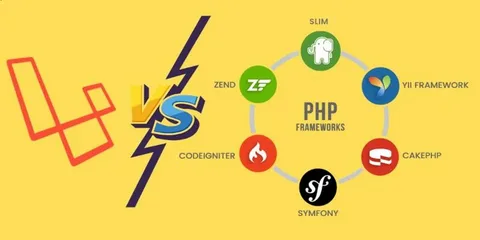
Choosing the right PHP framework can make or break the success of a modern web application. With businesses expecting faster development, stronger security, and more scalable solutions, the framework you pick directly affects product quality and long-term maintainability. Over the years, PHP has continued to evolve, and several frameworks—like Symfony, CodeIgniter, Yii, and Zend—still remain relevant. But one framework consistently stands out for contemporary development needs: Laravel.
Laravel has grown into a complete ecosystem that empowers developers to build clean, efficient, and powerful applications without unnecessary complexity. Its elegant syntax, extensive built-in tooling, and vibrant community make it a preferred choice for startups and enterprises alike. While every framework has strengths, Laravel has evolved into a modern standard in PHP development due to its balance of performance, developer experience, and real-world capabilities.
If you’re trying to decide between Laravel and other PHP frameworks, or planning to hire Laravel developers to scale your project, here’s an in-depth breakdown of why Laravel leads the pack.
What Makes Laravel More Modern Than Other PHP Frameworks?
Laravel was designed with a future-focused mindset. Instead of sticking to legacy programming patterns, it embraces clean architecture principles, dependency injection, expressive routing, and modular development. These traits make Laravel more aligned with current engineering expectations compared to other PHP frameworks that haven’t advanced as quickly.
Frameworks like CodeIgniter or Yii still work fine for smaller projects, but they often lack the developer-friendly features and built-in capabilities that modern web apps demand. Laravel offers functionalities such as queue handling, real-time event broadcasting, job dispatching, and API resource management without requiring dozens of external add-ons.
This modern approach not only improves productivity but also reduces the technical debt that often builds up in older frameworks.
How Does Laravel Improve Development Speed Compared to Other Frameworks?
One of the biggest advantages of Laravel is the speed at which developers can build and iterate. Much of this efficiency comes from Laravel’s thoughtful structure. It provides built-in tools like the Artisan command-line interface, Breeze and Jetstream authentication scaffolding, robust cache layers, database migrations, and queue workers. These tools dramatically cut down repetitive tasks and give developers the ability to deliver features faster without compromising structure.
In comparison, frameworks like Symfony—although powerful—can be more complex, requiring deeper configuration for features that Laravel provides out of the box. CodeIgniter is lightweight, but that minimalism also means more manual coding for common features. Laravel strikes the perfect balance between structure and simplicity, resulting in quicker turnaround and a smoother development lifecycle.
Businesses that want faster prototyping, quicker releases, and reliable long-term scalability often choose Laravel for these reasons. Many also prefer to hire PHP developers with Laravel experience because the framework’s ecosystem speeds up delivery while maintaining clean, testable code.
Why Laravel Offers Better Security for Modern Applications
Security is one of the biggest concerns for any company building a web application. Laravel takes security very seriously and provides robust protection at the framework level. Common vulnerabilities like SQL injection, XSS, CSRF, and mass assignment are handled automatically through Laravel’s built-in protection mechanisms.
While other frameworks may require additional configurations or third-party packages to achieve comparable security, Laravel incorporates modern best practices at its core. Features such as hashed password handling, encrypted cookies, rate limiting for APIs, and secure routing make Laravel an excellent choice for applications handling sensitive data.
In a digital landscape where cyber threats continue to evolve, using a secure, actively maintained framework is essential. Laravel’s security enhancements and regular updates keep it ahead of older PHP frameworks that may not receive frequent updates.
Does Laravel Scale Better Than Other PHP Frameworks?
Scaling is not just about handling more users; it’s about maintaining performance while the application grows in complexity. Laravel’s architecture is designed to support scaling at every level. The framework integrates seamlessly with caching systems like Redis and Memcached, supports horizontal scaling, and offers tools like Horizon for queue monitoring.
More importantly, Laravel’s modular approach makes it easier to break down logic into manageable components. This keeps large applications organized and scalable without forcing teams into rigid patterns. Frameworks like CodeIgniter or Yii may work for smaller applications, but they tend to fall short on flexibility when scaling to enterprise-level systems.
Companies that anticipate growth often choose to hire Laravel developers for this exact reason. Laravel’s scalability ensures that as your traffic or data grows, your app remains fast, stable, and easy to maintain.
How Laravel’s Ecosystem Outshines Other Frameworks
Laravel isn’t just a framework—it’s a complete development ecosystem. This ecosystem gives developers access to tools that streamline nearly every part of modern web application development. For example:
- Laravel Forge helps manage servers effortlessly.
- Laravel Vapor provides serverless deployment capabilities.
- Laravel Nova offers a sleek administration panel.
- Laravel Echo enables real-time updates using WebSockets.
- Laravel Scout simplifies full-text search integration.
No other PHP framework offers an ecosystem this wide or this polished. These tools drastically reduce the need to rely on external libraries or build functionalities from scratch. If you’re planning to build a long-term digital product, Laravel’s ecosystem increases both development speed and reliability.
This is why businesses across industries—from retail to finance to SaaS—prefer Laravel as their primary PHP solution and often hire PHP developers who specialize in it.
Why Developers Prefer Laravel Over Other PHP Frameworks
Developer experience is a serious factor in the success of a project. When developers enjoy working with a framework, productivity goes up and bugs go down. Laravel’s elegant syntax, easy debugging, and clean structure make it one of the most enjoyable PHP frameworks to work with.
This positive developer experience is one of the reasons Laravel has one of the largest and most active PHP communities. A strong community also means better support, more third-party packages, frequent updates, and a rich library of tutorials and documentation.
While frameworks like Symfony are technically strong, they often come with a steeper learning curve. CodeIgniter is simple but lacks depth. Yii sits somewhere in the middle but doesn’t have the same real-world adoption level.
Laravel’s combination of power and simplicity makes it appealing for both new developers and experienced engineers building enterprise systems.
FAQs
1. Is Laravel faster than other PHP frameworks?
Laravel isn’t the fastest out of the box, but its caching tools, optimized routing, queue system, and modern architecture allow it to achieve high performance in real-world applications. With proper optimization, Laravel performs exceptionally well in production environments.
2. Why do companies prefer to hire Laravel developers?
Businesses prefer Laravel specialists because the framework supports rapid development, strong security, and scalable architecture. Developers familiar with the ecosystem can deliver complex features faster and maintain cleaner codebases.
3. Can Laravel handle enterprise-level applications?
Yes, Laravel is widely used in enterprise applications thanks to its modular structure, queue handling, caching layers, and integration with cloud platforms. Its scalability and ecosystem make it ideal for large, complex systems.
4. Is Laravel suitable for building APIs?
Laravel is one of the best PHP frameworks for API development. It includes API resource classes, rate limiting, authentication methods like Passport and Sanctum, and smooth JSON response handling, making API development efficient and secure.
5. Should I hire PHP developers or Laravel specialists for my project?
If your application is built using Laravel or requires modern features, hiring Laravel developers is more beneficial. However, if you need support for multiple PHP technologies, general PHP developers may be a fit. Many businesses combine both depending on project needs.
