


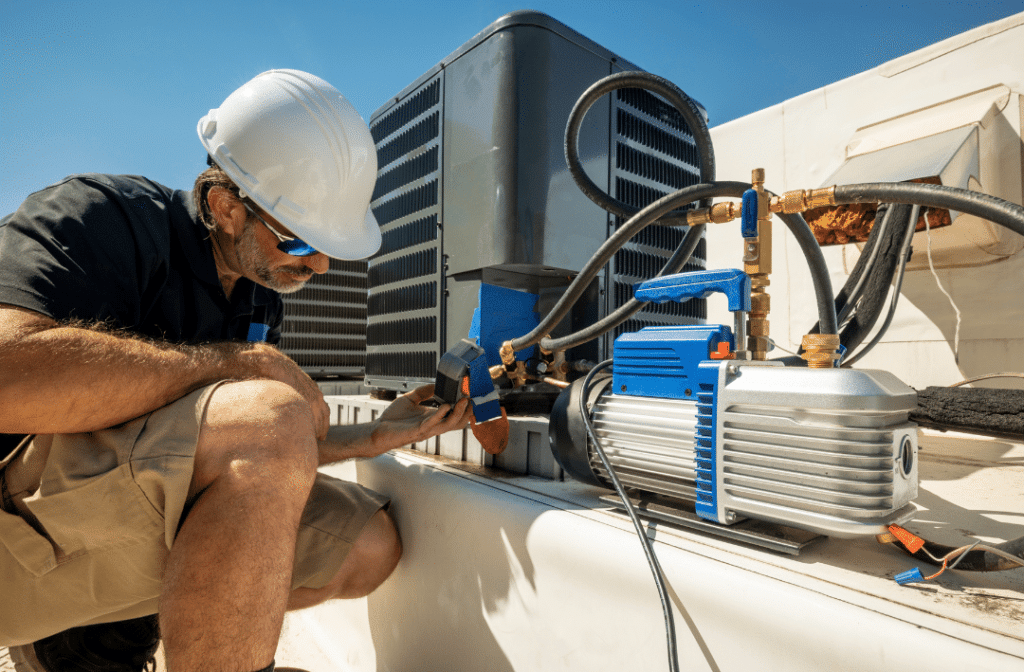
As summer fades and cooler evenings begin to arrive, Orange County homeowners have a valuable opportunity to prepare their heating systems before winter demand increases. Although Orange County experiences relatively mild winters compared with colder parts of the country, furnaces and other heating systems still need to operate safely and reliably when temperatures drop.
A furnace that has remained unused for several months can develop problems involving airflow, ignition, electrical components, filters, thermostats, or combustion-related parts. A pre-winter inspection can identify many of these issues before they turn into an unexpected no-heat situation. Industry guidance commonly recommends checking filters, vents, thermostats, carbon monoxide alarms, and the area around the furnace, while safety-critical combustion and heat-exchanger work should be handled by a qualified professional.
Why Check Your Furnace Before Winter?
Heating equipment may sit unused for much of the year in Southern California. Dust can accumulate, filters can become restricted, and components may experience wear even when the furnace is not running regularly.
Testing the system before you actually need it gives you time to identify unusual noises, weak airflow, ignition problems, short cycling, or thermostat issues. Scheduling service during the fall can also make it easier to address problems before colder weather increases demand for heating repairs.
For homeowners searching for furnace repair Orange County, the most important lesson is simple: do not wait for a complete breakdown before checking the heating system.
1. Check and Replace the Furnace Filter
The air filter should be one of the first items on your pre-winter checklist. A dirty or clogged filter restricts airflow and can make the furnace work harder than necessary.
Restricted airflow can contribute to overheating, poor comfort, and short cycling. ENERGY STAR-based maintenance guidance recommends inspecting or changing filters regularly, with the appropriate interval depending on the system, filter type, household conditions, and usage.
When installing a replacement filter, make sure the airflow arrow points in the correct direction. It is also useful to write the installation date on the filter so you know when it should be checked again.
2. Test the Thermostat
Before winter arrives, switch the thermostat to heating mode and set the temperature several degrees above the current indoor temperature. Give the furnace enough time to start its normal heating cycle.
Pay attention to whether the system starts promptly and whether warm air eventually reaches the supply registers. If the thermostat display is blank, the system does not respond, or the furnace repeatedly starts and stops, further diagnosis may be necessary.
Simple problems such as depleted thermostat batteries can sometimes be handled by the homeowner. More complicated electrical or equipment problems should be evaluated professionally.
3. Listen for Unusual Furnace Noises
Your furnace can provide useful warning signs through changes in sound. During the first test cycle, listen for anything different from its normal operation.
Rattling, grinding, persistent buzzing, squealing, banging, or repeated clicking can indicate that a component needs attention. A brief sound during startup may not always indicate a serious problem, but persistent or increasingly loud noises should not be ignored.
Identifying unusual sounds early can help prevent a relatively small mechanical problem from developing into a larger repair.
4. Check Supply and Return Vents
Walk through each room and make sure supply registers and return grilles are open and unobstructed. Furniture, curtains, rugs, boxes, and other household items can interfere with airflow.
Blocked registers can contribute to uneven temperatures throughout the house. They can also make the heating system work harder to distribute conditioned air.
Keeping the return-air path clear is particularly important because the furnace needs adequate airflow to operate properly.
5. Look for Uneven Heating
If one bedroom stays cold while other rooms become comfortable, do not automatically assume that the furnace itself needs replacement.
Uneven heating can be related to blocked registers, ductwork problems, restricted returns, insulation, air leaks, thermostat location, or an improperly sized heating system. In some cases, a professional inspection can determine whether the problem originates with the furnace or the home’s air-distribution system.
This is especially relevant in older Orange County properties where ductwork and insulation may have been modified over the years.
6. Watch for Short Cycling
Short cycling occurs when the furnace repeatedly turns on and off without completing a normal heating cycle. It can be caused by several issues, including restricted airflow, thermostat problems, overheating, incorrect sizing, or malfunctioning safety controls.
An occasional cycle ending normally is different from a furnace that repeatedly starts and stops within a short period.
If short cycling continues after you have checked the filter and obvious airflow restrictions, professional diagnosis is appropriate. Continuing to operate a malfunctioning system can increase component wear and reduce comfort.
7. Inspect the Area Around the Furnace
The space surrounding the furnace should remain clean and accessible. Do not use the furnace area as a storage location for boxes, paint, chemicals, gasoline, cleaning products, or other combustible materials.
The Air-Conditioning, Heating, and Refrigeration Institute also recommends keeping the furnace area unobstructed and ensuring the furnace’s front panel is correctly installed during operation.
Maintaining clear access also makes it easier for a technician to inspect the equipment if service becomes necessary.
8. Test Carbon Monoxide Detectors
If your home contains fuel-burning heating equipment or other combustion appliances, carbon monoxide protection deserves particular attention.
Test your carbon monoxide alarms before heating season and replace batteries or expired units according to the manufacturer’s instructions. Carbon monoxide is colorless and odorless, so homeowners cannot rely on their senses to detect it.
If a carbon monoxide alarm activates, leave the home and contact the appropriate emergency or utility service rather than attempting to diagnose the combustion equipment yourself.
9. Pay Attention to Unusual Odors
The first heating cycle after months of inactivity can sometimes produce a temporary dusty smell as accumulated dust burns off heated surfaces.
However, strong or persistent unusual odors should not simply be dismissed. A gas odor, burning electrical smell, or other unusual smell can indicate a potentially serious problem.
If you smell gas, avoid creating flames or sparks and follow your local utility’s emergency instructions. If you suspect carbon monoxide exposure, leave the property and seek emergency assistance.
10. Schedule a Professional Furnace Inspection
Homeowners can safely perform several basic checks, but important parts of furnace maintenance require specialized knowledge and equipment.
A professional inspection can address components such as the heat exchanger, burners, ignition system, gas pressure, combustion, venting, safety controls, electrical connections, and airflow. These checks are important because many safety-related problems cannot be identified through a simple visual inspection.
For gas furnaces, professional attention is particularly important because combustion and venting problems can create safety hazards.
11. Check for Warning Signs From Last Winter
Before scheduling maintenance, think back to how your furnace performed during the previous heating season.
Did certain rooms remain cold? Did the furnace make unusual sounds? Did you notice increasing energy use? Did the system require repeated resets or repairs? Did it take longer than usual to heat the house?
Write down these observations and share them with the technician. A history of symptoms can help narrow down potential causes and make the inspection more productive.
12. Consider the Age and Condition of the System
Pre-winter maintenance is also a useful time to evaluate the overall condition of an older furnace.
A repair may make sense when the equipment has a localized, reasonably serviceable problem. However, repeated breakdowns, major component failures, declining performance, or an aging system may lead homeowners to compare continued repairs with replacement.
If replacement becomes necessary, heating capacity should be selected based on the home’s actual requirements rather than simply choosing a larger furnace. Oversized heating equipment can cycle too frequently and may operate less efficiently.
DIY Checks vs. Professional Repairs
A useful rule is to keep homeowner maintenance limited to simple, non-invasive tasks.
Homeowner-Friendly Checks
- Replace or inspect the air filter.
- Test the thermostat.
- Check that vents and returns are unobstructed.
- Keep the furnace area clean and accessible.
- Test carbon monoxide alarms.
- Listen for unusual noises.
- Observe one normal heating cycle.
Tasks Best Left to a Professional
- Gas-line or gas-pressure work
- Burner servicing
- Heat-exchanger inspection
- Combustion testing
- Venting diagnosis
- Electrical component repairs
- Ignition-system repairs
- Safety-control testing
- Internal furnace cleaning and repairs
Avoid opening or modifying components involving gas or combustion simply to save the cost of a service visit. The potential safety consequences are much greater than the convenience of a DIY repair.
A Simple Pre-Winter Checklist
Before the first significant cold spell, Orange County homeowners can work through this quick checklist:
☐ Replace or inspect the furnace filter
☐ Test the thermostat in heating mode
☐ Check supply registers and return grilles
☐ Listen for unusual sounds
☐ Watch for short cycling
☐ Keep the furnace area unobstructed
☐ Test carbon monoxide alarms
☐ Note unusual smells
☐ Check for uneven heating
☐ Review problems experienced last winter
☐ Schedule professional maintenance when needed
☐ Address warning signs before the heating system is needed continuously
When Should You Call for Furnace Repair?
A professional should be contacted when basic checks do not resolve a problem or when the furnace shows signs of a potentially significant malfunction.
Important warning signs include repeated short cycling, failure to produce heat, persistent unusual noises, poor airflow, repeated ignition failures, unusual burning odors, unexplained performance changes, or a carbon monoxide alarm.
The goal of pre-winter maintenance is not merely to make the furnace run. It is to make sure the system can provide dependable heat while operating safely.
Final Thoughts
Orange County’s relatively mild climate can make it easy for homeowners to forget about their furnaces until a chilly night arrives. That approach can leave little time to diagnose problems before heating is needed.
A better strategy is to inspect the simple items early, test the system before winter demand increases, keep airflow unrestricted, maintain carbon monoxide protection, and arrange professional service for safety-critical components.
A few preventive checks can reveal problems while they are still manageable. Whether your system needs a simple maintenance visit or more extensive furnace repair Orange County, preparing before the first cold spell can help you approach winter with greater confidence and fewer unexpected heating problems.
